
**Source:** AKRON, OHIO (UP)
—
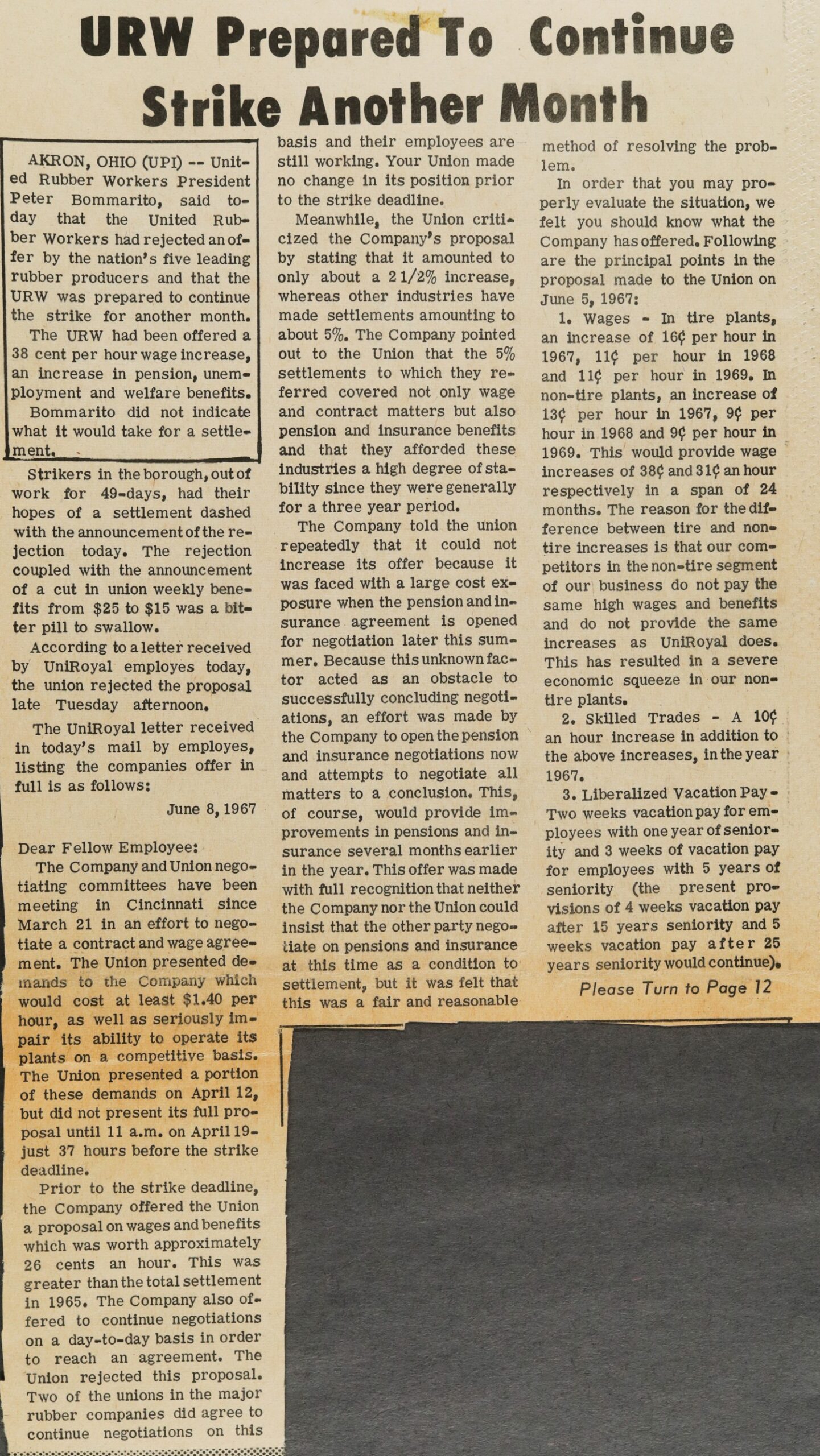
United Rubber Workers President Peter Bommarito, said today that the United Rubber Workers had rejected offers by the nation’s five leading rubber producers and that the URW was prepared to continue the strike for another month. The URW had been offered a 38 cent per hour wage increase, an increase in pension, unemployment and welfare benefits. Bommarito did not indicate what it would take for a settlement.
Strikers in the borough, out of work for 49-days, had dashed hopes of a settlement with the announcement of the rejection today. The rejection coupled with the announcement of a cut in union weekly benefits from $25 to $15 was a bitter pill to swallow.
According to a letter received by Uniroyal employees today, the union rejected the proposal late Tuesday afternoon.
The Uniroyal letter received in today’s mail to employees, listing the companies’ offer in full is as follows:
June 8, 1967
Dear Fellow Employees:
The Company and Union negotiating committees have been meeting in Cincinnati since March 21 in an effort to negotiate a contract and wage agreement. The Union presented demands to the Company which would cost at least $1.40 per hour, as well as seriously impair its ability to operate its plants on a competitive basis. The Union presented a portion of these demands on April 12, but did not present its full proposal until 11 a.m. on April 19-just 37 hours before the strike deadline.
Prior to the strike deadline, the Company offered the Union a proposal on wages and benefits which was worth approximately 26 cents an hour. This was greater than the total settlement in 1965. The Company also offered to continue negotiations on a day-to-day basis in order to reach an agreement. The Union rejected this proposal. Two of the unions in the major rubber companies did agree to continue negotiations on this basis and their employees are still working. Your Union, however, has rejected the Company’s offer and is prepared to continue the strike for another month.
Meanwhile, the Union criticized the Company’s proposal by stating that it amounted to only about a 21 1/2% increase, whereas other industries have made settlements amounting to about 5%. The Company pointed out to the Union that the 5% settlements to which they referred covered not only wage and contract matters but also pension and insurance benefits and that they afforded these industries a high degree of stability since they were generally for a three year period.
The Company told the union repeatedly that it could not increase its offer because it was faced with a large cost exposure when the pension and insurance agreement is opened for negotiation later this summer. Because this unknown factor acted as an obstacle to successfully concluding negotiations, an effort was made by the Company to open the pension and insurance negotiations now and attempts to negotiate all matters to a conclusion. This, of course, would provide improvements in pension and insurance several months earlier in the year. This offer was made with full recognition that neither the Company nor the Union could insist that the other party negotiate on pensions and insurance at this time as a condition to settlement, but it was felt that this was a fair and reasonable method of resolving the problem.
In order that you may properly evaluate the situation, we felt you should know what the Company has offered, following are the principal points in the proposal made to the Union on June 5, 1967:
1. Wages – In tire plants, an increase of 10¢ per hour in 1967, 11¢ per hour in 1968 and 11¢ per hour in 1969. In non-tire plants, an increase of 13¢ per hour in 1967, 9¢ per hour in 1968 and 9¢ per hour in 1969. This would provide wage increases of 32¢ and 31¢ an hour respectively in a span of 24 months. The reason for the difference between tire and non-tire segment of our business do not pay the same high wages and benefits and do not provide the same increases as Uniroyal does. This has resulted in a severe economic squeeze in our non-tire plants.
2. Skilled Trades – A 10¢ an hour increase in addition to the above increases, in the year 1967.
3. Liberalized Vacation Pay – Two weeks vacation pay for employees with one year of seniority and 3 weeks of vacation pay for employees with 5 years of seniority (the present provisions of 4 weeks vacation pay after 15 years seniority and 5 weeks vacation pay after 25 years seniority would continue).
Please Turn To Page 12