Merry Christmas – Happy New Year
UNIROYAL CHEM-texts
Vol. 1 PUBLISHED FOR THE PEOPLE OF UNIROYAL CHEMICAL No. 3
QUALITY . . The Most Important Ingredient
(One of the difficulties of modern industry is the loss of quality or pride of workmanship which identified “handmade” products of the past. Mr. D.E. Fowler, manager of Distribution and Scheduling has put down some thoughts on the subject of quality which are well worth considering. Ed.)
Our business depends on our customers wanting to buy our products in preference to buying similar materials from our competitors. Our continued growth, and even our maintaining present business depends on our supplying better products, with more dependable quality and shipping the materials when and how the customer wants them. In short, we must do a superior job with respect to quality and service.
A customer will prefer to buy from the supplier in which he has confidence. Confidence that our product will always perform in his application because its quality is good and does not change, and that we will get the material to him as we have agreed to do and he can depend on continuing his operations. Confidence in us is first built by our Sales organization, but must be maintained by all of us
throughout the organization, and all of us must avoid the many pitfalls that tend to destroy it.
Quality itself is a result of the processing and workmanship and graded by testing and we are always striving for a uniform product, but beyond this the impression that we make on the customer can be injured by poor appearing packages, torn or dirty outer packages, crushed cartons, dented drums, indistinct labeling, accidental inclusion of foreign objects, etc. These throw doubt on the quality of the workmanship on the product itself.
Of equal importance is service, which is getting the product to the customer when he wants it. The fear that a supplier might shut their operation down through failure to deliver is an important consideration. Any failure to supply intensifies this fear and
reduces our chance of continuing as the supplier. It is not necessary to shut him down this time by being a day or so later than we had promised, he worries about the next time and has to decide whether we are or are not as reliable a supplier as he can find. Shipment delays are caused by a number of types of happenings including quality rejections of products that we depended on to ship, sampling delays, testing delays, process difficulties, equipment breakdowns as well as failures of carriers to pickup a shipment as scheduled, carrier breakdown or otherwise detained in transit. Failures to ship the amount requested, or to follow customers requests as to markings, notification of shipment, prompt test reports, or using specified carriers, etc. are annoyances to the customer that lessen our chances of continuing as his supplier.
The best possible job by everyone in our organization to build customer confidence will contribute considerably to our continued business growth.
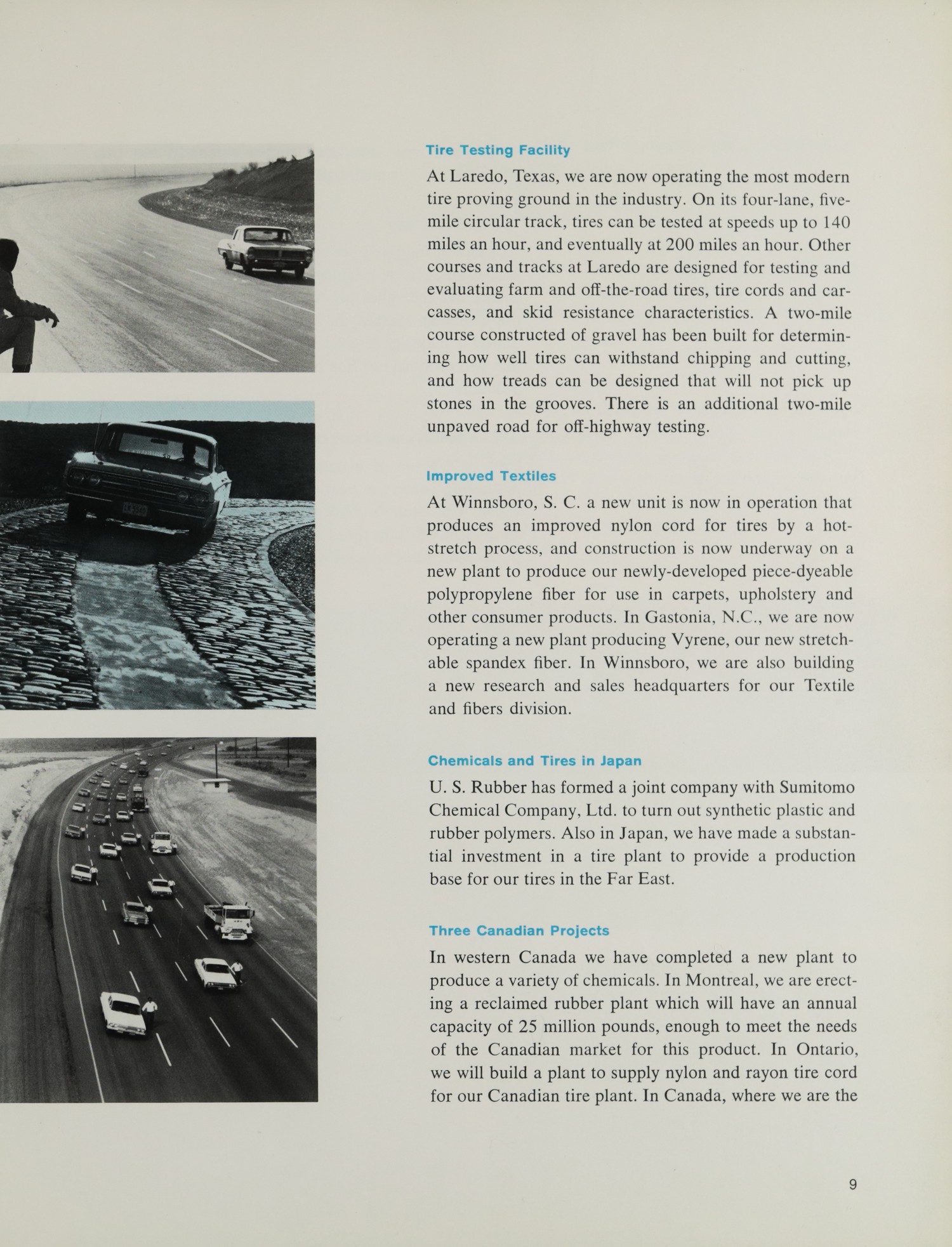
NEW WAY TO TEST TIRES
[IMAGE: Motorized vehicle with cattle in field]
Besides tending 250 head of cattle, this motorized cowhand is testing our tires at the Laredo, Texas, tire proving ground. In a new program, ranchers who rent part of our land at Laredo are equipped with company tires which are inspected regularly for damage from the rocky terrain and needle-like cactus plants. The test program is part of our continuing effort to find new ways of preventing tire punctures.
LOCAL 308 RATIFIES NEW AGREEMENT
The tentative agreement reached between the Company and Local #308 Union Negotiating Committee on 10-26-67 was ratified unanimously at membership meetings held on 11-8-67. The
provisions of the new supplemental agreement, as well as the improved benefits of the 1967 Company-wide Agreement, including vacations and anniversary pay, have been made effective as of 10-26-67.
Strikes Affect Sales, Earnings During Third Quarter and Nine Month Periods
Strikes at 19 tire, C & I and chemical plants caused sales and profits to decline for the third quarter and first nine months, George R. Vila, chairman and president, announced.
Third quarter sales declined 8.6% to $287,367,000, compared with $314,398,000 last year. Net income was $7,563,000, or 51 cents a share of common stock. This compared with $11,631,000, or 84 cents, in 1966.
Earnings in August and September exceeded the same months in 1966 and, if it had not been for the strike, earnings for the quarter would have been improved over the same period last year.
Sales during the first nine months totaled $924,329,000, 5.8 per cent lower than last year’s $981,448,000. Net income for the nine months
came to $18,663,000, compared with $35,692,000 last year. Earnings were $1.20 a share, compared with $2.59 for the same period of 1966.
Third quarter results also were affected by the vacation shutdowns provided in labor agreements, Mr. Vila said. Time was required to start up the plants after the strikes
and vacations. Product inventories were depleted or out of balance, thus curtailing filling of customer orders. Following agreement on the master labor contract, the company started negotiation of local plant supplements. The Opelika, Ala. tire plant was struck for 37 days ending only in mid-October.
A PENNY FOR YOUR THOUGHT
In 1904, a Danish post office worker conceived the idea of a small stamp for Christmas letters and parcels in order to raise funds to set up a children’s tuberculosis hospital. The stamps sold for a penny each. Three years later a small dwelling used as a tuberculosis hospital in Delaware was about to be closed because of lack of funds. A woman who was interested in the hospital heard about the Danish post office worker and enlisted the aid of a leading Philadelphia newspaper to help put over a similar drive. The paper backed this drive and before Christmas rolled around, $3,000, ten
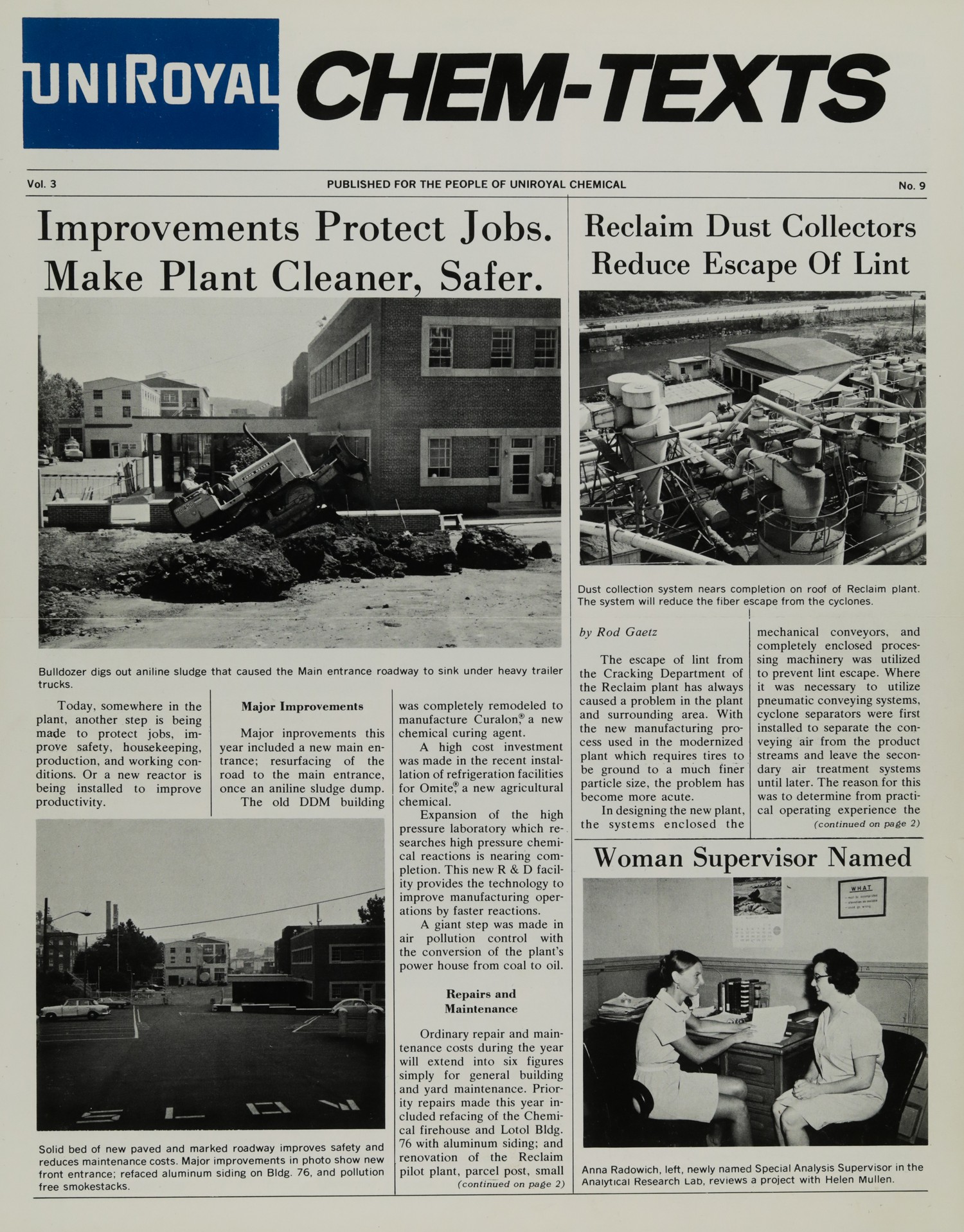
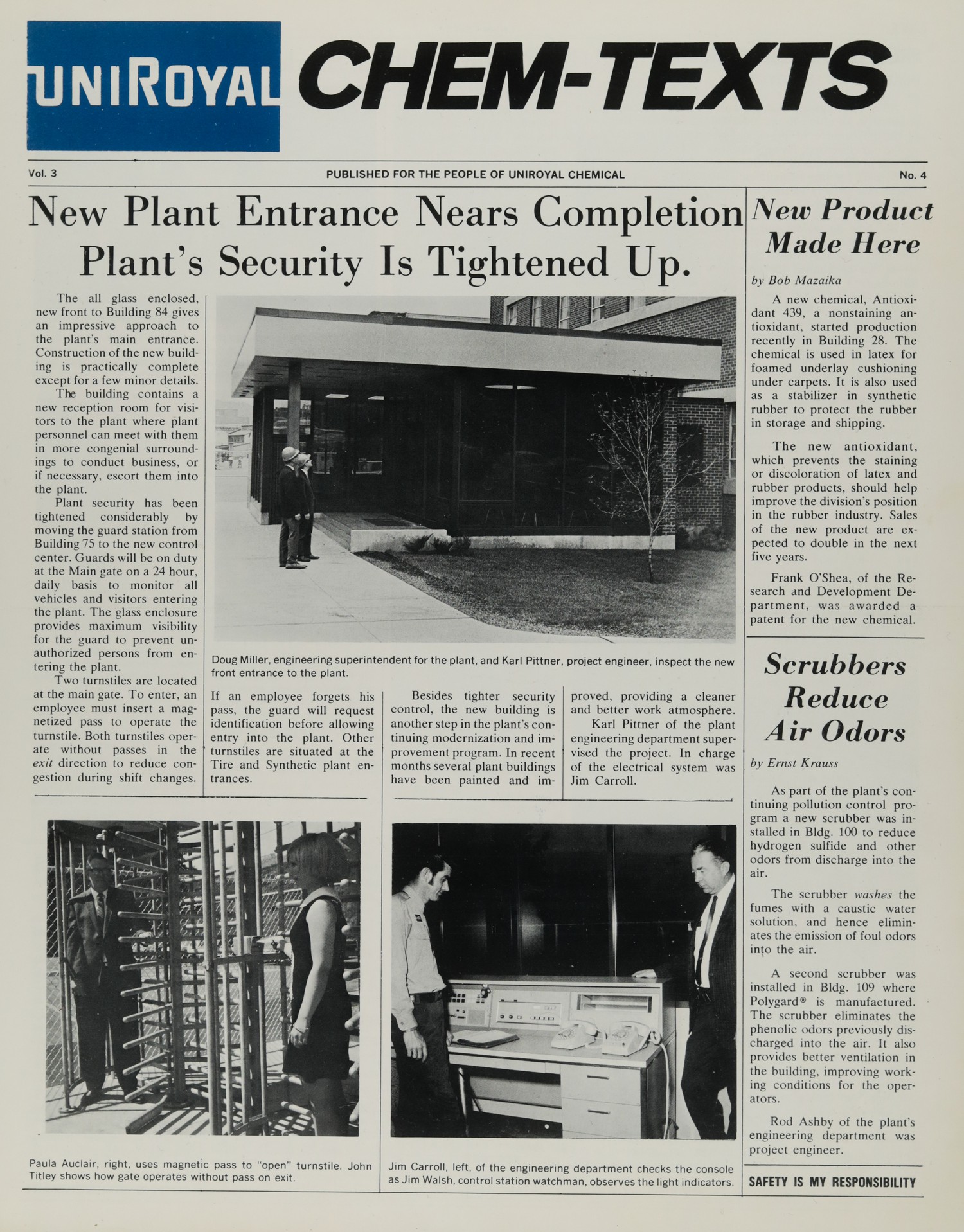
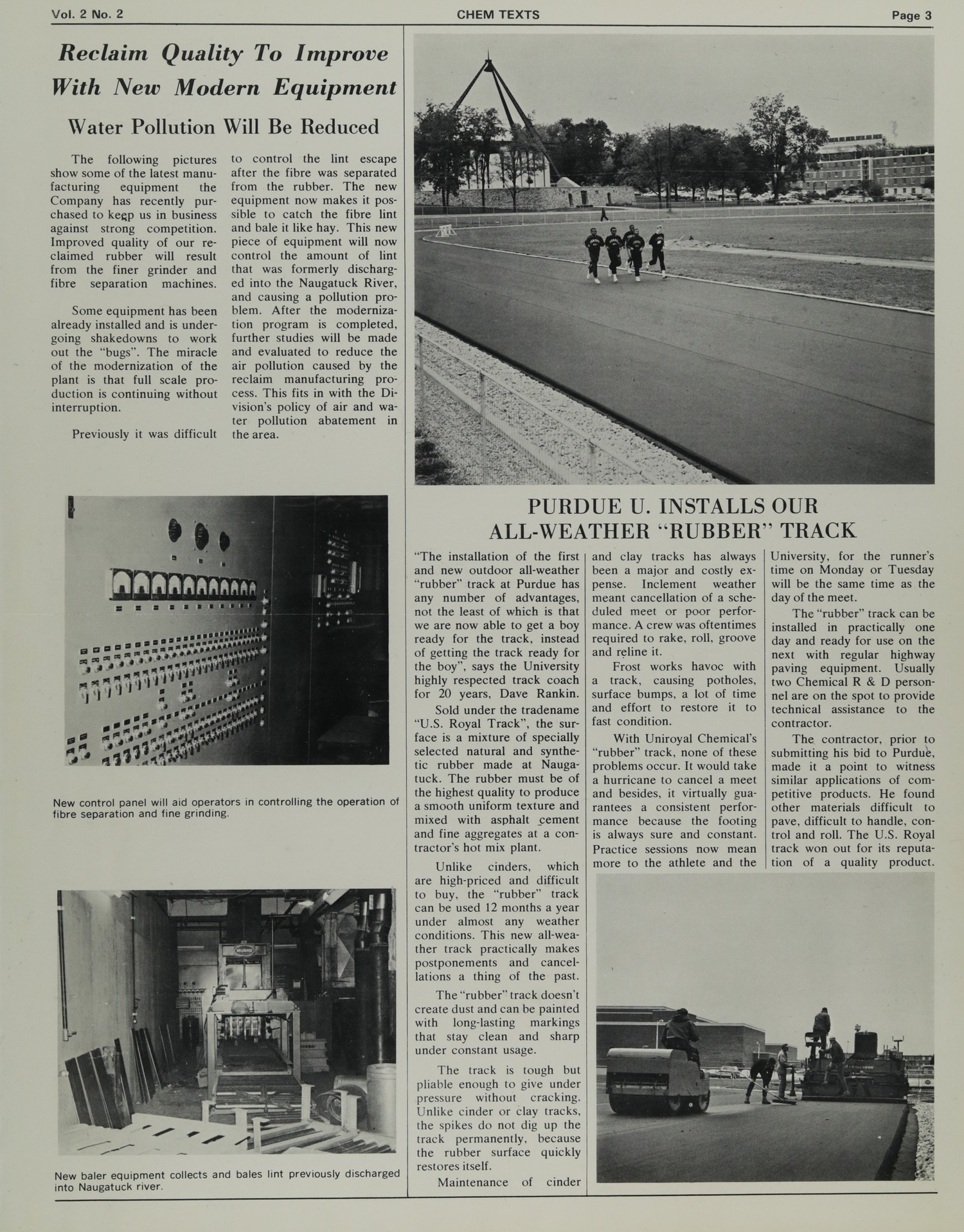
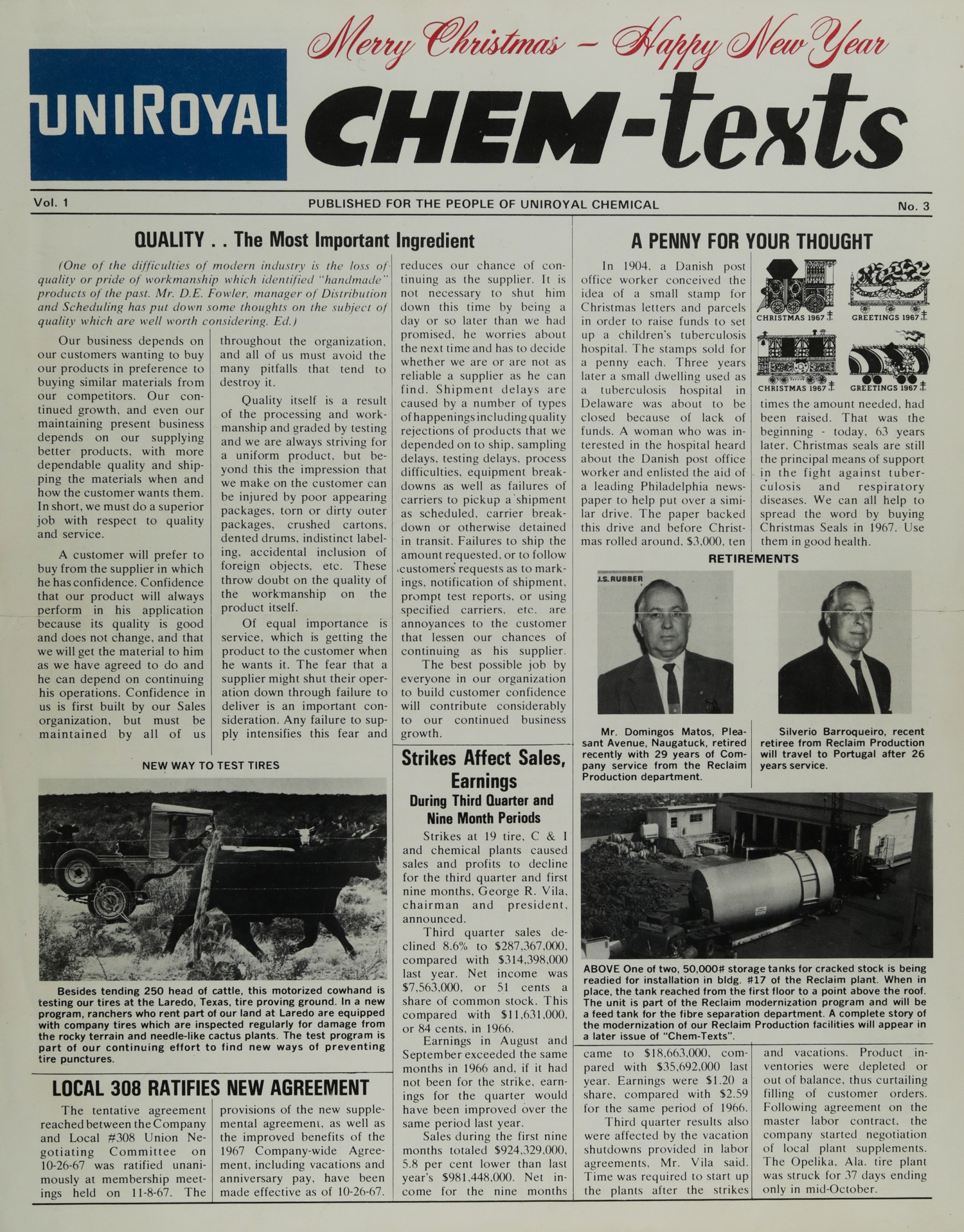
times the amount needed, had been raised. That was the beginning – today, 63 years later, Christmas seals are still the principal means of support in the fight against tuberculosis and respiratory diseases. We can all help to spread the word by buying Christmas Seals in 1967. Use them in good health.
[IMAGES: Christmas 1967 seals and Greetings 1967 stamps shown]
RETIREMENTS
U.S. RUBBER
[IMAGE: Photo of Mr. Domingos Matos]
Mr. Domingos Matos, Pleasant Avenue, Naugatuck, retired recently with 29 years of Company service from the Reclaim Production department.
[IMAGE: Photo of Silverio Barroqueiro]
Silverio Barroqueiro, recent retiree from Reclaim Production will travel to Portugal after 26 years service.
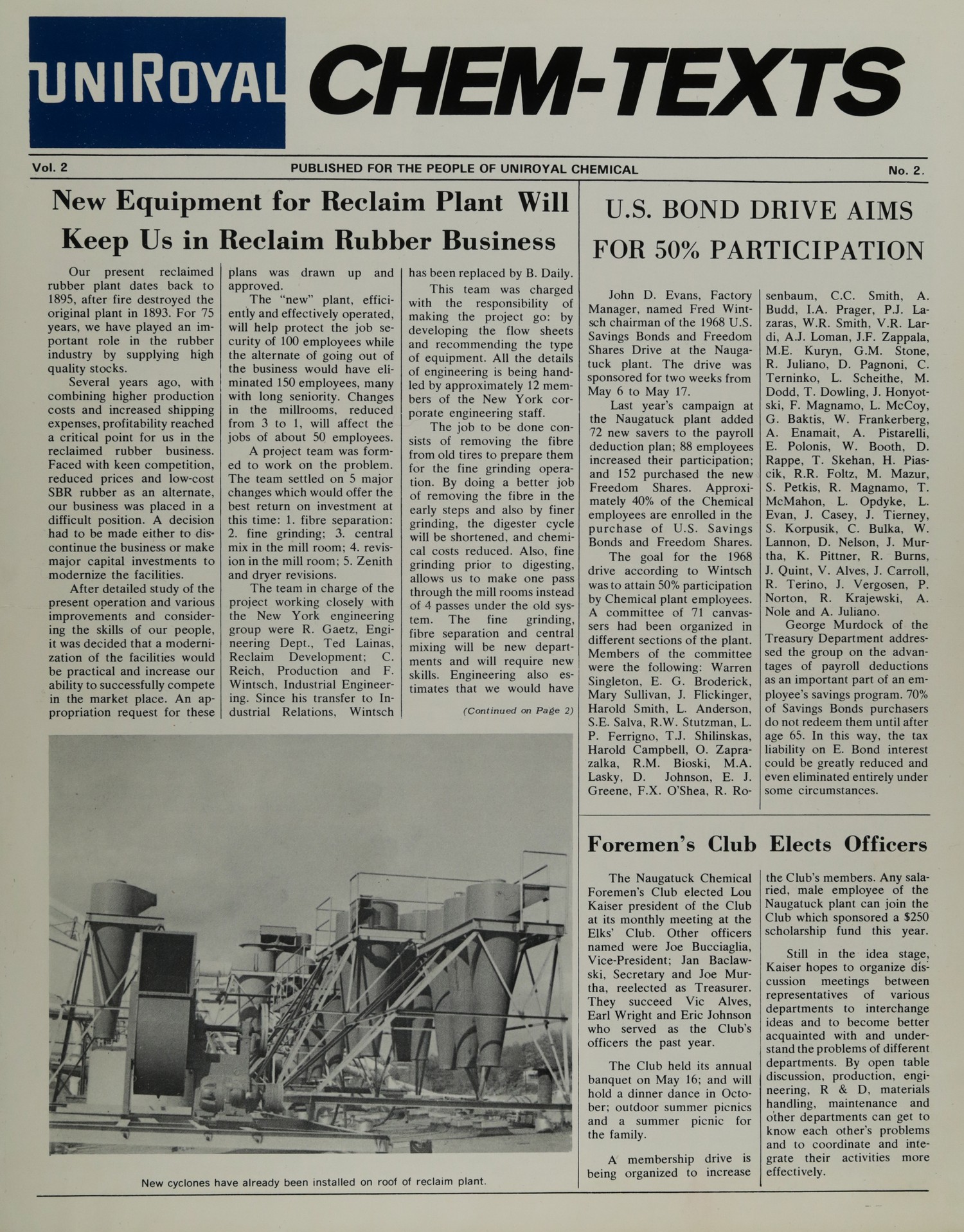
[IMAGE: Large industrial storage tank being lifted]
ABOVE: One of two, 50,000# storage tanks for cracked stock is being readied for installation in bldg. #17 of the Reclaim plant. When in place, the tank reached from the first floor to a point above the roof. The unit is part of the Reclaim modernization program and will be a feed tank for the fibre separation department. A complete story of the modernization of our Reclaim Production facilities will appear in a later issue of “Chem-Texts”.